A Country Standing Still
Italy keeps standing still while AI changes how the world works.
Disponibile anche in italiano.
OpenAI released GPT-6 Astra this week: a model that can operate a computer on its own, move between the browser, terminal, and professional software, and carry out complex projects from start to finish. It can, for example, build and test a working application or open Blender and create a 3D scene, while staying on task with little supervision. In June, Anthropic shipped Claude Fable 5, capable enough that it launched with safeguards rerouting the riskiest requests to a weaker model. This is where the technology stands today.
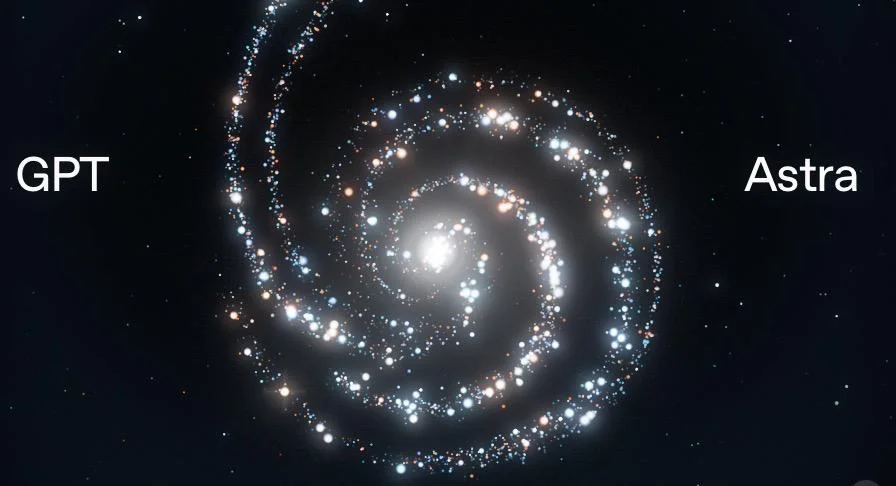
Astra’s release pushed me to write down a thought that has been bothering me for months: the distance between that frontier and everyday life in Italy, a country standing still while this technology changes how the world works.
Where I’m Coming From
I’m not a startup CEO promising that agents will replace your whole team by Christmas. I use these tools every day: I built my coding workflow around them and I run an agent at home for the boring personal stuff. I know their limits because I hit them every day. And I don’t believe in the Terminator or Matrix scenario with robots replacing us all.
Using them daily gives me a clear view of two things: how much models like Astra are changing knowledge work right now, and how little of that reality reaches everyone else in this country. This year the distance stopped being abstract for me.
School Is Looking Backwards
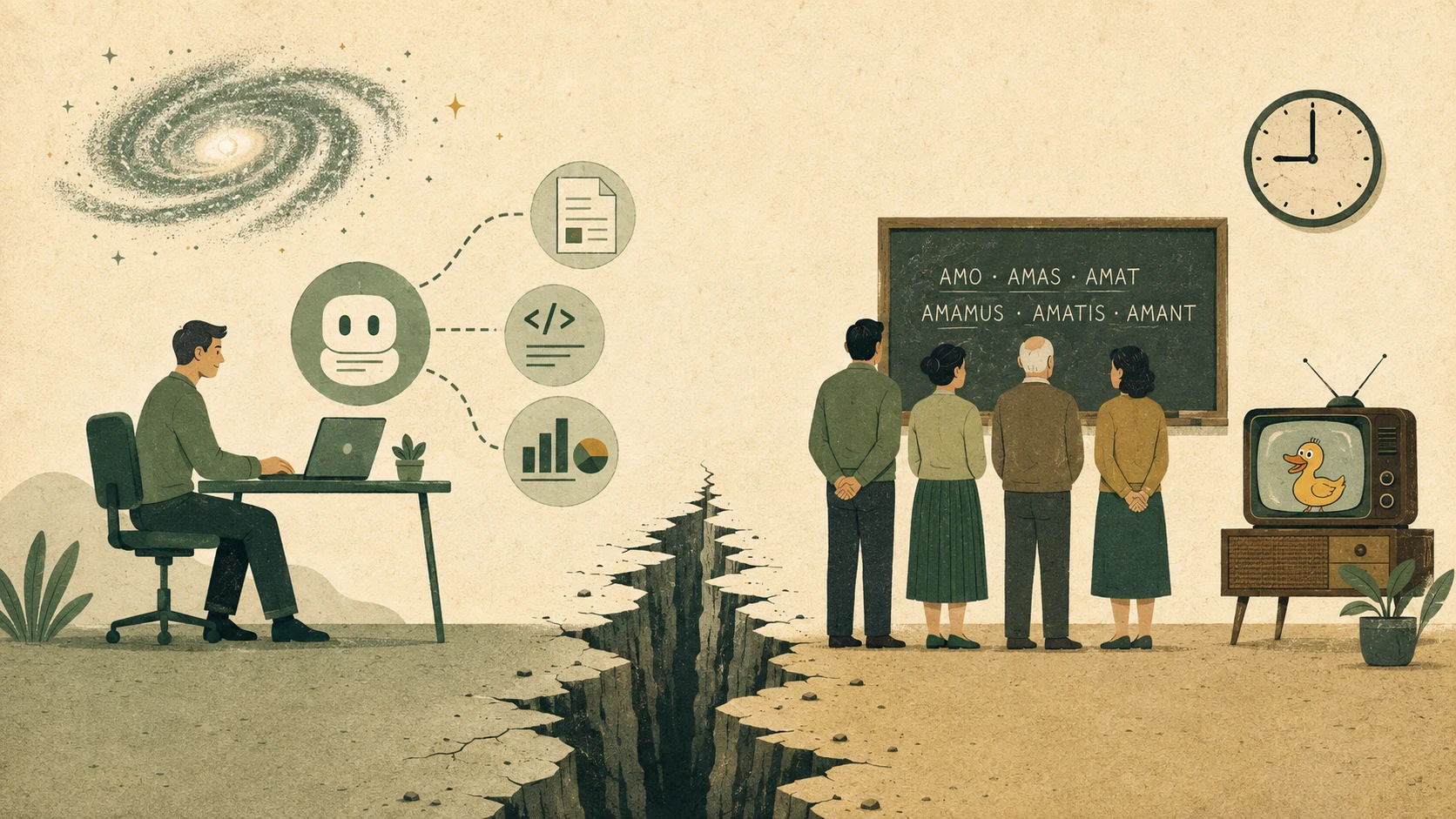
Someone close to me started teaching in an Italian middle school, so I now hear about school from the inside. In the same week Astra came out, she and her colleagues were dealing with the new national guidelines, in force since September 1st: optional Latin, poems learned by heart, cursive handwriting, the Bible among the suggested readings. AI gets a paragraph, to be integrated “with prudence”.
I studied Latin at a scientific high school and I don’t doubt it’s a workout for the brain. But if the goal is teaching kids to reason, logic, statistics, and philosophy get you there while also preparing them for the world they will live in. A ministry that answers this decade with Latin declensions has already decided which century it lives in.
I don’t blame the teachers. Keeping up with AI is close to a full-time job, and they have classrooms to run. The people who write the rules have no such excuse.
Brussels Calls It a Search Engine
That includes Brussels. On September 1st, the European Commission designated ChatGPT as a Very Large Online Search Engine under the Digital Services Act, the same label it applies to Google Search. Put that next to what Astra shipped two days later: a model that can use professional software and carry out entire projects, including building a 3D scene in Blender, regulated as if it returned a list of links. When the regulator misreads the technology this badly, the rules that follow will miss what these systems can do, for good and for harm.
We have designated ChatGPT as a Very Large Online Search Engine and Reddit and Roblox as Very Large Online Platforms under the Digital Services Act.
— European Commission (@EU_Commission) August 31, 2026
They now have four months to comply with additional DSA obligations.
More: https://t.co/gIR8vTolmB#DSA pic.twitter.com/luusxUd3i4
Prime Time Shows Ducks
If the institutions misread AI, the general public gets a caricature of it. This February, on national TV, Sanremo ran its first “AI experiment”: a sponsored sketch that turned the Ariston audience and Carlo Conti into ducks during Papaveri e Papere. The result looked like the amateur tools of three years ago, and viewers reacted as you would expect: “Look how bad this AI stuff is.”

We are way past that. Today you can watch an AI-generated video and have no way to tell it from real footage. Millions of people built their picture of generative AI on deformed ducks, while models reached the point where you cannot separate generated from real. A public that misjudges the technology this badly can neither use it nor defend itself from it.
The Bill Arrives as Productivity
All of this lands on an economy that was already struggling. Real wages in Italy fell 1.6% between 1990 and 2024, while the OECD average grew 35% and American wages grew 50%. And have you seen the state of small businesses? There are offices where Excel counts as advanced technology, and if they watch you work with an agent you might as well be an alien.
The pattern is not new. The US pulled ahead of Europe during the ICT wave: since 1995, output per hour grew almost 90% there against 30% in the euro area. AI is repeating it: in 2026, 43% of American workers use AI on the job against 32% in Europe, and Italy sits near the bottom among the surveyed countries. A technology that multiplies the output of whoever adopts it is bad news for whoever stands still.
Meanwhile, in China
Between 2021 and 2025, Chinese universities cut 12,200 degree programmes considered obsolete and opened 10,200 new ones, touching about a third of all university programmes in the country. Nine universities added majors in embodied intelligence. I’m not holding China up as a model in general, but on this specific point the contrast hurts: one country is redesigning education around the transition, the other is debating poems learned by heart.
What I Want
I don’t have a grand plan, and I distrust anyone who claims one. I want foundations: schools that teach kids how these tools work and where they fail, institutions that regulate what the technology is rather than what it resembles, and support for small businesses to modernize how they operate. Accurate information instead of duck sketches, so people can judge models like Astra and Fable for what they are today.
If we keep standing still, this gap will define the next twenty years the way flat wages defined the last twenty-five.